
There are few drinks as freighted with expectation as the martini. Order one and you invoke a century of cultural mythology—Bond’s specifications, Parker’s warnings about three, Churchill bowing toward France while pouring gin. Yet beneath this accumulated lore lies something more elemental: a drink whose enduring appeal stems from radical simplicity and the precision it demands.
The martini likely emerged from the Martinez, a sweeter, vermouth-forward predecessor enjoyed in California’s Gold Rush country during the 1880s. Those early versions bore little resemblance to what we know today—Old Tom gin, sweet vermouth, bitters, often maraschino or curaçao, mixed at ratios around 1:1. What happened between then and now represents one of the most dramatic transformations in cocktail history, driven as much by changing notions of sophistication as by actual taste evolution.
The martini falls into the Strong & Compact category—typically landing around 60 proof with just over one ounce of pure alcohol. This combination creates a specific kind of drinking experience that demands respect and rewards attention. You’re not sipping a three-ounce Old Fashioned over an hour; you’re experiencing a smaller, more concentrated expression of gin’s botanical complexity, tempered and refined by vermouth.
As such, this is aperitif territory, best enjoyed before dinner when your palate is fresh and your evening is just beginning. The high proof creates warmth without overwhelming volume, making each sip a deliberate act rather than casual refreshment. A properly made martini sets a particular tone—contemplative rather than convivial, sophisticated rather than celebratory.
It’s a drink that creates space for conversation, that commands the kind of attention usually reserved for fine wine. The relatively modest total alcohol content means you can enjoy one without derailing your evening, but the concentrated strength means you’ll feel that one distinctly. This is why the martini has remained the drink of choice for that liminal hour between work and dinner, when you want something serious without commitment to a long night.
As for technique, the preparation ritual matters nearly as much as the recipe. The debate between shaking and stirring persists, but physics favors stirring for this particular architecture. Shaking introduces air bubbles and ice chips that cloud the drink and alter its texture—acceptable for citrus-based cocktails where you want that frothy integration, but antithetical to the martini’s crystalline clarity.
Instead, stirring for thirty seconds or more with ample ice achieves proper dilution and temperature without compromising the drink’s visual or textural integrity. The goal is a cocktail cold enough to frost the glass, which itself should be pre-chilled. These aren’t affectations but technical requirements for a drink whose primary virtues are temperature and texture.
Get it right, and you will remember this esoteric uniqueness every time you order or make one.
The ratio question reveals deeper philosophical orientations. Contemporary bartenders have been quietly rehabilitating vermouth’s reputation, typically recommending between 4:1 and 6:1, gin to vermouth. This acknowledges what extreme dryness obscures: vermouth isn’t decorative but architectural, providing botanical complexity and silken texture that tempers gin’s juniper-forward intensity. A 5:1 ratio serves most palates well—enough vermouth to create balance without announcing itself.
For gin, quality matters enormously since there’s nowhere to hide. A London Dry style works best—Beefeater, Tanqueray, or Plymouth all provide the juniper backbone this drink requires without the aggressive botanicals that can dominate in such a transparent context. For vermouth, there are two directions one can take; Dolin Dry offers clean, herbal character, while Noilly Prat brings more complexity if you prefer vermouth slightly more present.
The garnish choice—olive versus lemon twist—isn’t trivial. An olive contributes brine and umami, creating savory dimension that complements the drink’s herbal notes. A lemon twist, expressed over the surface to release citrus oils, adds brightness and aromatic lift.
Neither is wrong; they produce different experiences of the same fundamental structure. What makes the martini endure isn’t its association with elegance but its unforgiving transparency. Poor-quality spirits, improper dilution, or incorrect proportions announce themselves immediately. This is a drink that rewards attention and punishes carelessness — a drink that suggests restraint sometimes yields more than abundance.
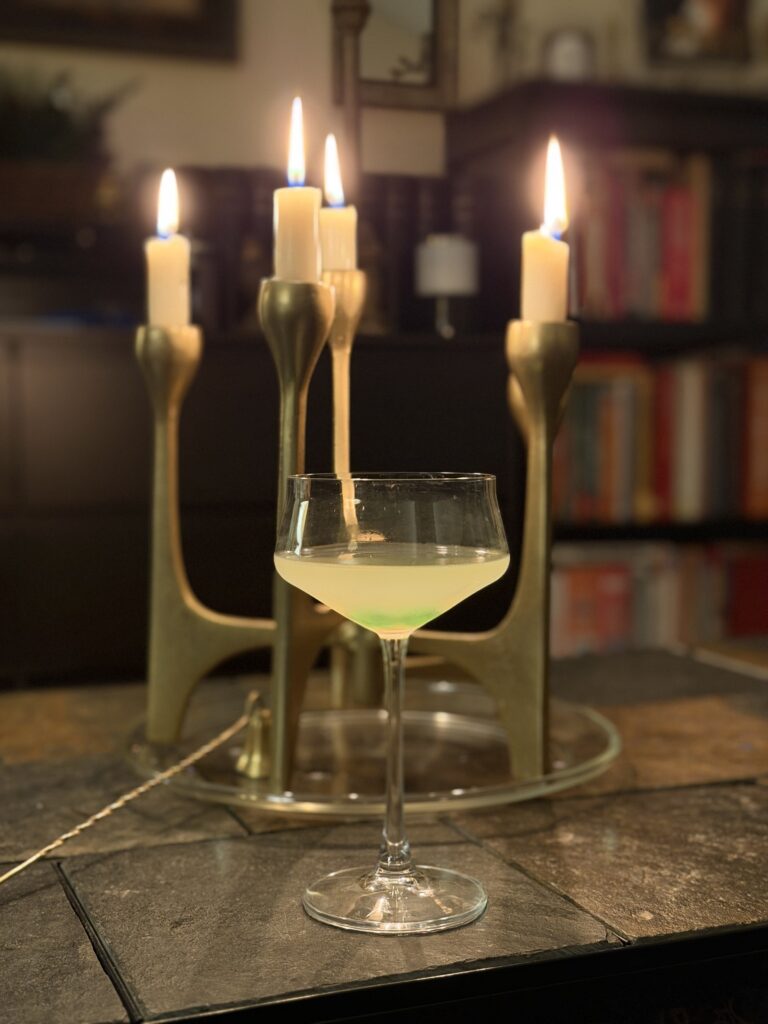
Classic Martini
Is there any more quintessential a cocktail than the martini? One could argue the point, but why not just enjoy one instead? There are a million ways to do this one – shaken, stirred, gin, vodka, base to vermouth ratio, garnish, etc; what's listed reflects the tastes of the author.
Method
-
Chill your martini glass.
-
In a cocktail shaker or other mixing vessel, combine the gin (or vodka) and dry vermouth.
-
Fill aforementioned shaker / vessel with ice, and stir gently for one half minute until very cold, taking care not to do so vigorously to avoid dilution and maintain texture.
-
Strain into chilled martini glass. Garnish with lemon peel by squeezing over drink to express oils, then coating the rim of glass optionally before depositing into drink. Alternatively, olives may be employed as a garnish instead.
Now, for a different variation, here is also a dry martini.
Dry Martini
Method
-
Chill your martini glass.
-
In a cocktail shaker or other mixing vessel, combine the gin (or vodka) and dry vermouth.
-
Fill aforementioned shaker / vessel with ice, and stir gently for one half minute until very cold, taking care not to do so vigorously to avoid dilution and maintain texture.
-
Strain into chilled martini glass. Garnish with lemon peel by squeezing over drink to express oils, then coating the rim of glass optionally before depositing into drink. Alternatively, olives may be employed as a garnish instead.